Table of Content
State buildings will begin to be open to the public on May 15 at 25 percent occupancy and state agencies are directed to continue to bring more state employees back to work in person, with proper distancing and protections in place. All personal care and grooming businesses, including but not limited to, barber shops, beauty salons, nail salons, spas, massage parlors, tattoo parlors, and other similar businesses. During March 1–May 31, 42 states and territories issued mandatory stay-at-home orders, affecting 2,355 (73%) of 3,233 U.S. counties .
In addition, testing and contact tracing are ramping up, which further supports the decision to go to Phase One. "Today, effectively immediately, we're pulling the Sacramento region out of the stay-at-home order," Newsom said. "Looking at the projection out four weeks and anticipating that we will be above 15% ICU bed capacity, and they are thinking that the Thanksgiving, Christmas, New Year's surges, we're seeing the worst of it and it's getting better," Edwards said. This website is using a security service to protect itself from online attacks.
Director / State Public Health Officer
There are several actions that could trigger this block including submitting a certain word or phrase, a SQL command or malformed data. The 11 counties in the Southern California region are Los Angeles, Orange, Ventura, Riverside, San Bernardino, San Diego, San Luis Obispo, Santa Barbara, Mono, Imperial and Inyo. Los Angeles County has been allowing houses of worship to hold indoor services since last month. All counties will return to using the color-coded tier system, the California Department of Public Health said.

The Governor’s Office today established a timeline and process to continue winding down the various provisions of the 58 COVID-related executive orders, which suspended statutes and regulations to help the state and businesses continue operations during the pandemic. To ensure that impacted individuals and entities have time to prepare for the changes, the provisions will sunset in phases, beginning later this month, in July and in September. For example, the suspension of certain licensing requirements for manufacturers to produce hand sanitizer will end on June 30, as shortages are no longer a concern. By the end of September, nearly 90 percent of the executive actions taken since March 2020 will have been lifted. The state had lifted its stay-at-home order and transitioned to the “Safe at Home” order on May 1, which also allowed nonessential businesses to begin to reopen. The self-quarantine rule was issued in early April, while the other main remaining restriction, a ban on gatherings of 10 people or more, was imposed in March.
Environmental Health
Local officials say the decision to lift the stay-at-home order is based on ICU projections which put capacity at 19% in four weeks. It was triggered when a region's intensive care unit availability dipped below 15%. Los Angeles County Supervisor Hilda Solis said the county will come into alignment with state restrictions now that the COVID-19 stay-at-home order has been lifted, including a resumption of outdoor dining by the end of the week. According to Inslee's Safe Start program, each Washington county that applies for the next phase in the Safe Start plan has to be allowed by a vote of the county's board of health.

The stay-at-home order, announced Dec. 3, split the state into five regions and was based on the area's intensive care unit capacity. Phase One guidance will allow essential businesses, as defined by CISA, to remain open. Non-essential businesses (sometimes called “gray area” businesses) and places of worship may remain open at 25 percent of their occupancy. All business owners should read the order to understand which category their business falls into. The State Fire Marshal and the Louisiana Department of Health will continue issuing guidance to different types of businesses about Phase One in the coming days, in order to ensure that businesses and churches can safely operate to the maximum level allowed in Phase One.
More testing needed before states implement Trump's reopening guidance, experts say
Unless it is an emergency, do not go to a health care facility without calling first, because you may put yourself at risk of being exposed to COVID-19. Several counties held press conferences Thursday outlining how their county would reopen. Several jurisdictions like Prince George's and Montgomery counties and Baltimore City will remain under their own stay at home order and will not be reopening. Those jurisdictions are also reporting among the highest cases of coronavirus in the state.
Services and activities, such as outdoor dining and personal services, may resume immediately with required modifications, subject to any additional restrictions required by local jurisdictions. High risk individuals should continue to stay at home, except for essential activities, like getting food or medical care. Industries that would likely reopen first are those involved in construction and manufacturing, he said.
The Governor’s office is constantly updating its website at gov.louisiana.gov, as is the Louisiana Department of Health at ldh.la.gov/Coronavirus. You can also call 211 for general information about COVID-19 and to get connected to help and resources. A Stay at Home order is the Governor directing people to avoid going out in public unless it is absolutely necessary. Moreover, there must be adequate testing for county residents, the ability to implement contact tracing, isolation and quarantine of COVID-19 patients, and an ability to perform outbreak investigations. Washingtonians hunkered down for another month as they waited to see if the order, originally announced to end May 1, would be lifted on June 1.
In a detailed plan laid out by the governor, each county will have to reach certain requirements in order to apply for the next phase. This statute states that, in response to an emergency, the governor may issue executive orders, proclamations, and regulations that have the force and effect of law. Cities and counties in Texas can issue "shelter in place," "stay at home," or area quarantine orders. You should check your local news outlets to see if an order has been issued in your area.
Retailers will be allowed to reopen their businesses at a quarter of their capacity under the most widespread tier. California will lift its stay-at-home order across the state on Monday, paving the way for restaurants and personal care services to reopen with modified operations for the first time in weeks, according to a statement from the state's health department. Should states reopen too early, coronavirus cases may spike again, undoing the good social distancing did for weeks. Should they continue to stay closed, small businesses across the state may never recover and fiscal crises could grip many states. The Governor’s order will detail categories of businesses that can be open and those which must remain closed. All non-essential Phase One businesses and churches will be limited to 25 percent of their total occupancy, which meets the White House Guidance for Phase One that calls for “strict” social distancing measures.

During a Sacramento County Board of Supervisors meeting Tuesday, acting County Executive Ann Edwards said the order would be lifted immediately based on ICU projections. Schools which have already been given waivers to reopen campuses were allowed to continue in-person instruction under the order as well. LOS ANGELES -- Gov. Gavin Newsom announced California's regional stay-at-home order has been lifted because of a marked improvement in the state's battle against the coronavirus. All malls, except for stores in a mall that have a direct outdoor entrance and exit that provide essential services and products as provided by the Cybersecurity & Infrastructure Security Agency guidelines.
Dr. Monica Gandhi, an infectious disease expert at UCSF, told CBS San Franciscothat she was encouraged by the region's ICU availability. She is seeing hospitalizations drop first-hand at Zuckerberg San Francisco General, where she also works. With economies in tatters and novel coronavirus cases starting to plateau in many areas of the U.S., governors are starting to discuss ending stay-at-home orders -- many of which have been in place for over a month. There are now 18,638 people hospitalized with Covid-19, a recent dip across the state but still more than double the number of patients on Dec. 1, according to data from theCOVID Tracking Project, which is run by journalists at The Atlantic. California is reporting roughly 25,256 new Covid-19 cases a day on average, a more than 35% decline compared with a week ago, according to a CNBC analysis of data compiled by Johns Hopkins University.
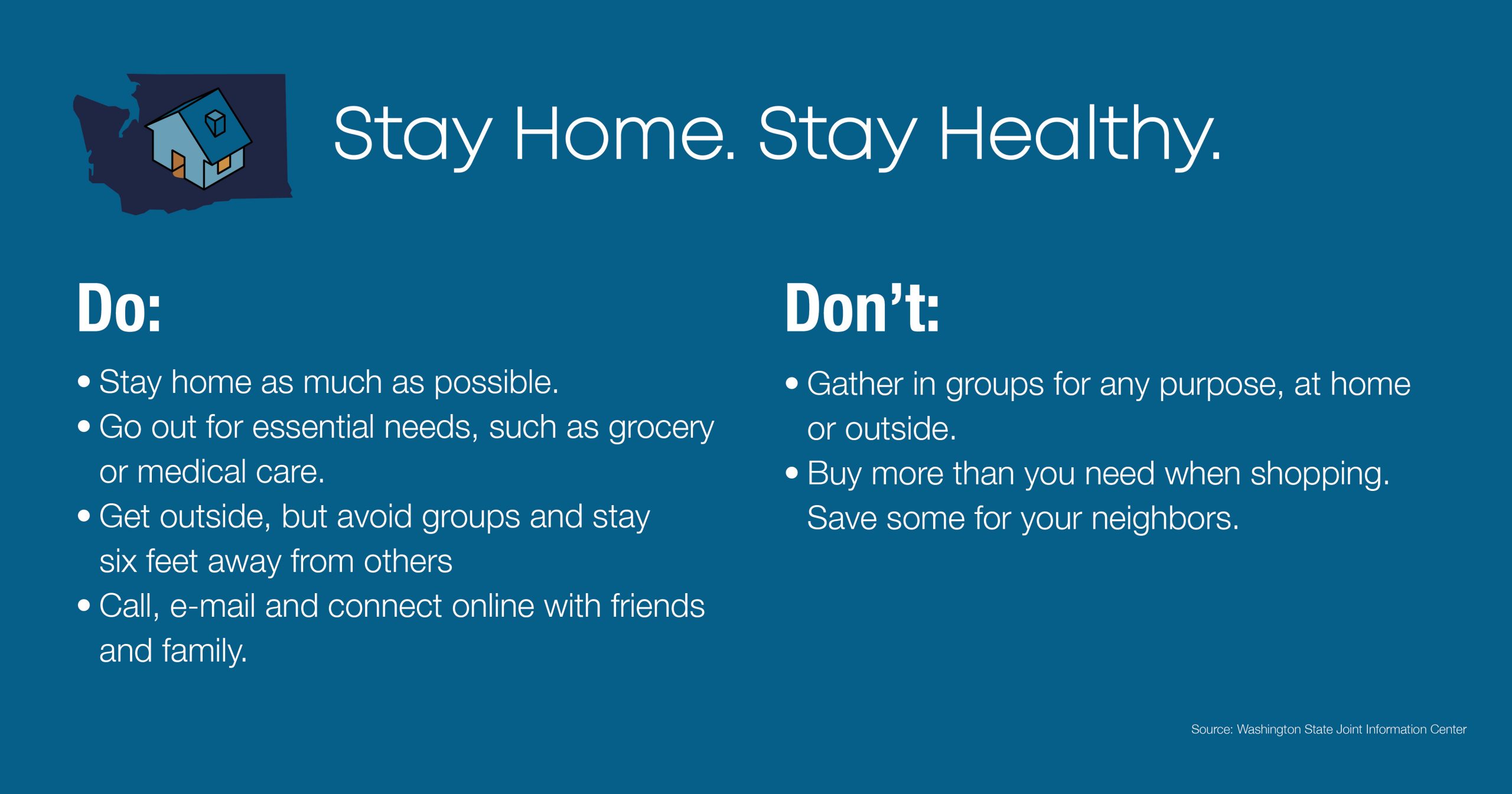
According to the governor, phase 1 includes some outdoor recreation, with a ban on large gatherings. Certain businesses such as construction, landscaping, automobile sales, and curb-side pick up for retail are permitted. Governor Jay Inslee held a press conference to announce that Washington's stay-at-home order will indeed be lifted this Monday, June 1, at midnight. Although things will not turn back to “normal,” Inslee is letting each county proceed with his new Safe Start plan, which allows the counties to move on to the next phases on a case by case basis. Ohio Gov. Mike DeWine on Tuesday removed the last remaining mandatory restrictions imposed due to the coronavirus pandemic. "Californians heard the urgent message to stay home as much as possible and accepted that challenge to slow the surge and save lives," said Dr. Tomás Aragón, CDPH director and state public health officer.
To further combat the spread of COVID-19 in Louisiana, Gov. Edwards issued a Stay at Home Order on March 22, directing all Louisiana residents to shelter at home and limit movements outside of their homes beyond essential needs. Other requirements to open counties include a letter from hospitals confirming that they have adequate bed capacity and an affirmative vote by local county commissioners. Phase 4 will allow public interactions to resume with physical distancing; gatherings of more than 50 people; clubs, concerts, and large sporting events. Washington’s largest counties including King, Snohomish and Pierce are still in phase 1 of Inslee’s plan. They have “COVID-19 rates of infection that are still above Inslee’s mark for advancing to the next phase,” reports KOMO News.


No comments:
Post a Comment